Artificial Glacier Loses Control and Early Warnings of Avalanche
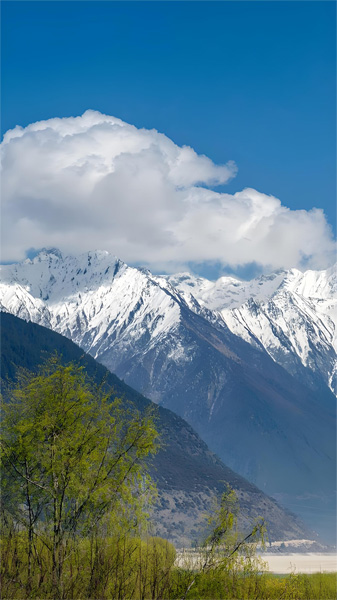
Glaciers, the oldest “frozen archives” on this blue planet, record millions of years of Earth’s climate changes. From the Antarctic ice sheet to the Himalayan Mountains, these seemingly eternal white giants are melting at an unprecedented rate in human history. NASA satellite data from 2023 shows that the global annual loss of glacier ice has reached 1.2 trillion tons, equivalent to the disappearance of ice from seven standard swimming pools every minute. This silent crisis is reshaping the face of the Earth, with impacts extending far beyond geography and striking at the very foundations of human civilization. On the other hand, glaciers reflect 30% of solar radiation back into space. For every one million square kilometers of Arctic ice sheet area lost, the resulting thermal effect is equivalent to that generated by 5 billion additional air conditioners running continuously worldwide. This positive feedback mechanism is accelerating global warming, creating a vicious cycle of “melting–warming–further melting.”
The accelerated melting of the Greenland ice sheet has led to crustal rebound, with its eastern region rising at a rate of 2 centimeters per year. And the "polar amplification effect" has accelerated the melting of the Greenland ice sheet to six times the rate observed in the 20th century. Meanwhile, glacier retreat in the Peruvian Andes has increased the frequency of local river course changes by 300%. The 40% reduction in Arctic sea ice area has caused the polar bear hunting success rate to plummet from 60% to 20%, with cub survival rates falling below historical lows. Glacier retreat on the Qinghai-Tibet Plateau has pushed the snowline upward by an average of 15 meters annually. In Bangladesh, the sea level is rising by 4 millimeters annually, causing salinization of 2,000 square kilometers of arable land and forcing 500,000 farmers to become climate refugees. In the Alps, the elevation line for ski resorts has shifted upward by 300 meters over the past decade, resulting in substantial annual losses for winter tourism industry. Ancient viruses released from melting glaciers are re-emerging.
Our team members are associating with artificial snow testing on the Morteratsch Glacier, where 4,000 snow cannons were used to cover an area of 10,000 square meters annually, successfully reducing summer ablation by 70%. And 72 parameters, including ice temperature, displacement, and crevasse propagation have been collected. By integrating AI algorithms, the research is trying to provide controls of glacier loses, as well as early warnings of ice avalanche risks.
We are highly interactive with the harsh or dangerous environment but remarkably concerning with life saving and environmental conservation for all living species. From the rain forest in Amazon to the Great Barrier Reef, from Siberia to the Aegean Sea, we take actions to fulfill these homeland of all lives with our care, responsibility and expertise.